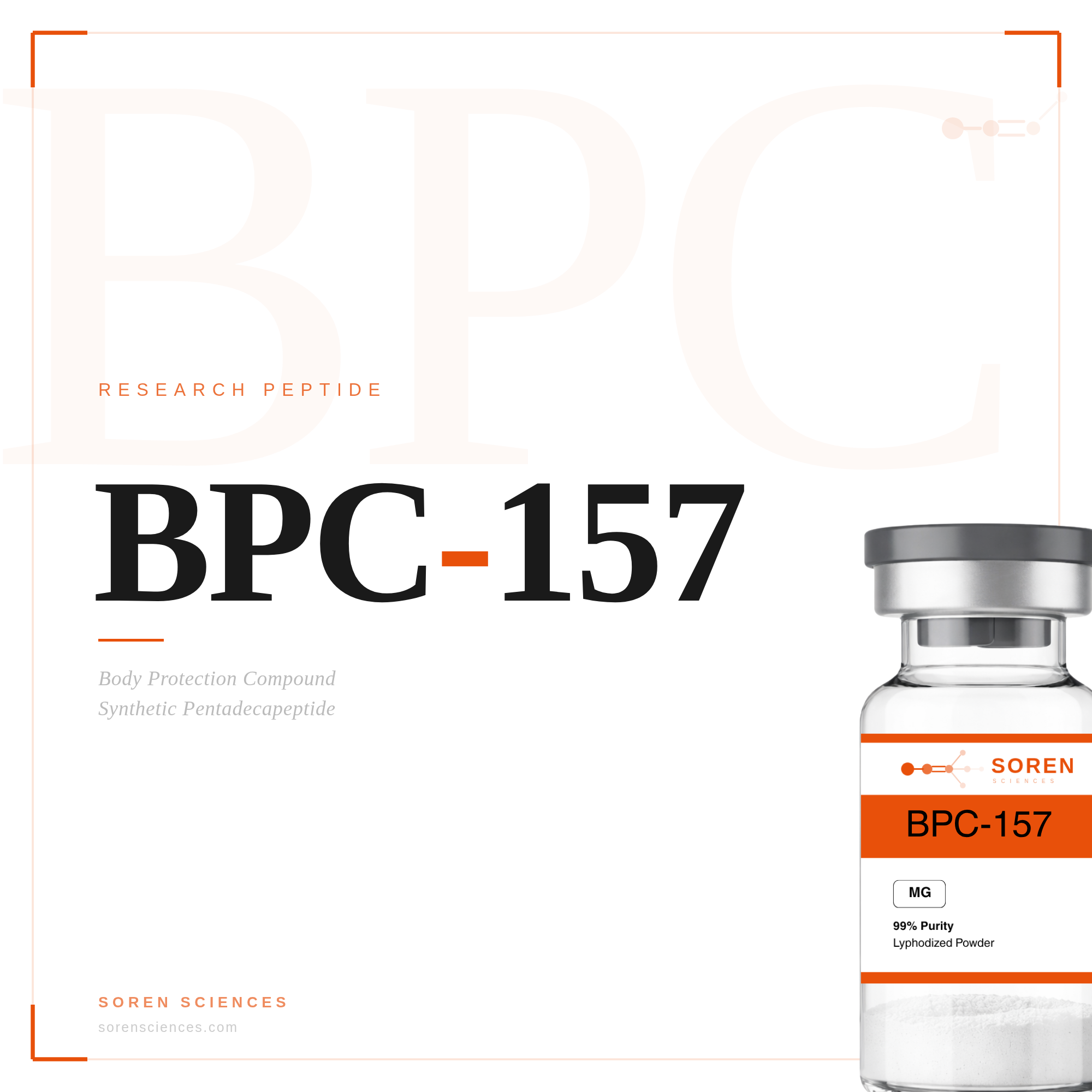
BPC-157 (Body Protection Compound-157) is a synthetic 15-amino acid peptide derived from a protein found in human gastric juice. Studied extensively in preclinical models, BPC-157 has demonstrated cytoprotective, neuroprotective, and anti-inflammatory properties, as well as a notable capacity to accelerate tissue and organ healing across multiple biological systems.
Mechanism of Action
BPC-157 promotes healing through several interconnected pathways. It activates the VEGFR2 pathway, stimulating angiogenesis and increasing blood flow to damaged tissue. It also activates the ERK1/2 pathway, enhancing cellular proliferation, migration, and vascular tube formation. Additionally, BPC-157 upregulates growth hormone receptor expression in tendon fibroblasts in a dose-dependent manner, enhancing their response to growth hormone via the JAK2 signaling pathway. Anti-inflammatory effects are mediated through a reduction in pro-inflammatory cytokines and modulation of nitric oxide signaling.
Preclinical Research Summary
A 2024 systematic review of 36 studies spanning 1993–2024 found that BPC-157 enhances growth hormone receptor expression and multiple pathways involved in cell growth and angiogenesis, while simultaneously reducing inflammatory cytokines. In preclinical models, BPC-157 consistently improved functional, structural, and biomechanical outcomes across muscle, tendon, ligament, and bone injury models. In tendon models specifically, BPC-157 accelerated outgrowth of tendon explants, increased cell survival under oxidative stress, and promoted fibroblast migration in a dose-dependent manner, likely mediated through activation of the FAK-paxillin pathway.
Product Specifications
- Sequence: Gly-Glu-Pro-Pro-Pro-Gly-Lys-Pro-Ala-Asp-Asp-Ala-Gly-Leu-Val
- Molecular Weight: 1,419 Da
- Form: Lyophilized powder
- Purity: ≥99%
- CAS: 137525-51-0
Regulatory Notice
This product is supplied for research use only. BPC-157 is not approved by any drug regulatory agency for human use and is classified as a prohibited substance by the World Anti-Doping Agency (WADA) as of 2022. Not for human or veterinary use.